Together AI frames polymorphic inference and compiler agents for shifting models, traffic, and chips
Together AI is advancing a production narrative that moves open-source inference from static deployment toward Polymorphic Inference designed to track churn in models, traffic, and hardware. The vendor links that concept to Together Compiler, which it says employs AI agents to keep inference tuned in production rather than relying on one-off manual optimization cycles. Together AI states the compiler can optimize open models in under twenty-four hours and achieve roughly 1.3 to 3 times higher throughput as traffic shifts. Operators weighing self-hosted or open-model serving may see this as an answer to constant stack change, though the evidence here is largely vendor blog material without third-party benchmarks or detailed workload definitions in the packet.
Together AI frames polymorphic inference and compiler agents for shifting models, traffic, and chips
Together AI says models, traffic, and chips keep changing and that Polymorphic Inference adapts while Together Compiler uses AI agents to keep production inference tuned. The vendor also reports that Together Compiler can optimize open models in under 24 hours and deliver 1.3 to 3x higher throughput as traffic changes.
Key takeaway
Polymorphic Inference plus agent-driven compilation is Together AI's bet that open production inference can stay tuned without endless manual rework.
What happened
Together AI published blog posts attributing a shift from static to polymorphic production inference to constantly changing models, traffic patterns, and chips, with Polymorphic Inference framed as adapting across those dimensions.
Together AI says Together Compiler uses AI agents and persistent engines to optimize open models in under 24 hours and reports 1.3 to 3x higher throughput as traffic changes; a related post titles Together Post-Training but the packet excerpt does not spell out post-training mechanics.
Evidence
Together AI positions Polymorphic Inference as adapting to changing models, traffic, and chips.
Together AI · attributed
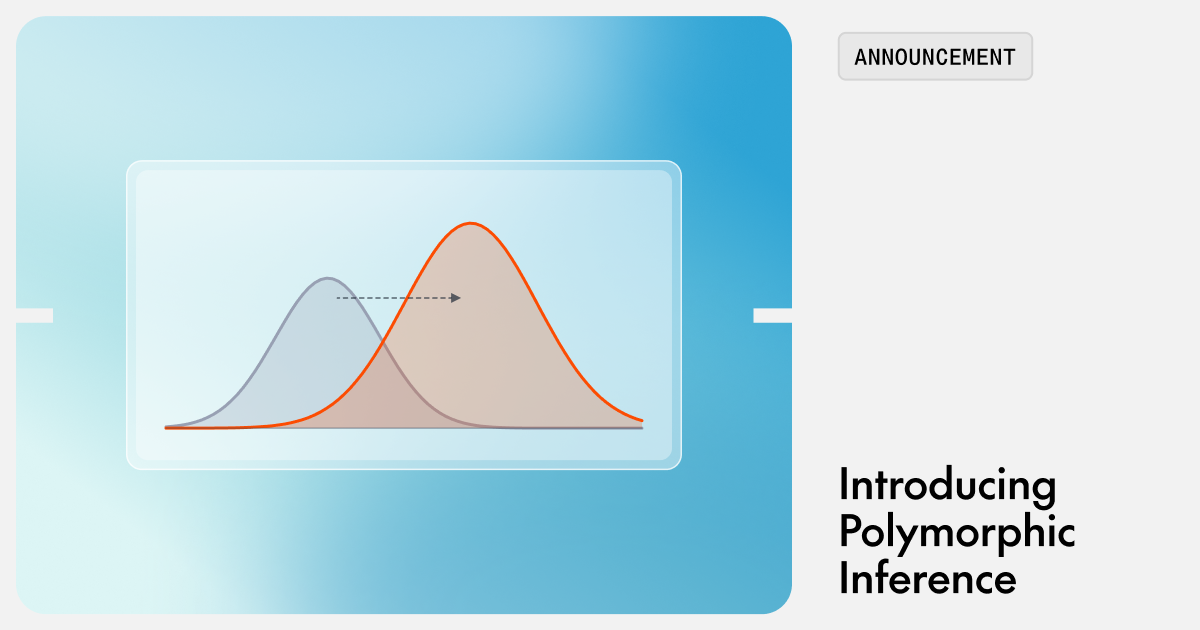
Models, traffic and chips are constantly changing. Polymorphic Inference adapts to each, and Together Compiler uses AI agents to keep production inference tuned.
Together AI frames the blog as moving from static to polymorphic inference for production open-source systems.
Together AI · attributed
From Static to Polymorphic Inference: A new era for production open-source inference systems
Together AI reports Together Compiler can optimize open models in under 24 hours with 1.3 to 3x throughput gains as traffic changes.
Together AI · attributed
Together Compiler uses agents and persistent engines to optimize open models in under 24 hours, delivering 1.3 to 3x higher throughput as traffic changes.
The owned-news body repeats the compiler timing and throughput range.
Together AI · attributed
The vendor also reports that Together Compiler can optimize open models in under 24 hours and deliver 1.3 to 3x higher throughput as traffic changes.
Why it matters
If automated compilation and polymorphic serving work as advertised, teams running open weights could spend less time re-tuning stacks when models or GPUs rotate, but capacity plans should not rely on unverified vendor throughput figures alone.
Limits and uncertainties
Throughput and under-24-hour optimization claims come from Together AI blog posts without independent benchmarks or workload definitions in the packet.
Related feed items on Revolut, Anthropic FlashProve, Mistral Large 4, agent monitors, and LocalLLaMA model lists are not verified extensions of the Together Compiler claims.
Practical implications
Operators serving open models should map their traffic and hardware churn against whether continuous compilation fits their release and observability workflows.
Builders comparing self-hosted coding inference costs should treat third-party anecdotes such as Revolut's reported ~90% cut as unverified until methodology and quality trade-offs are documented.
What to watch
Whether Together AI or customers publish reproducible benchmarks for Polymorphic Inference and Together Compiler under named models and traffic profiles.
Follow-on detail on Together Post-Training and how it connects to compiler-driven inference tuning in production.
Original reporting: Models, traffic and chips are constantly changing. Polymorphic Inference adapts to each, and Together Compiler uses AI agents to keep production inference tuned.