Meta open-sources Muse Gadgets ESP32 DIY stack and Muse Home Link USB-C batch
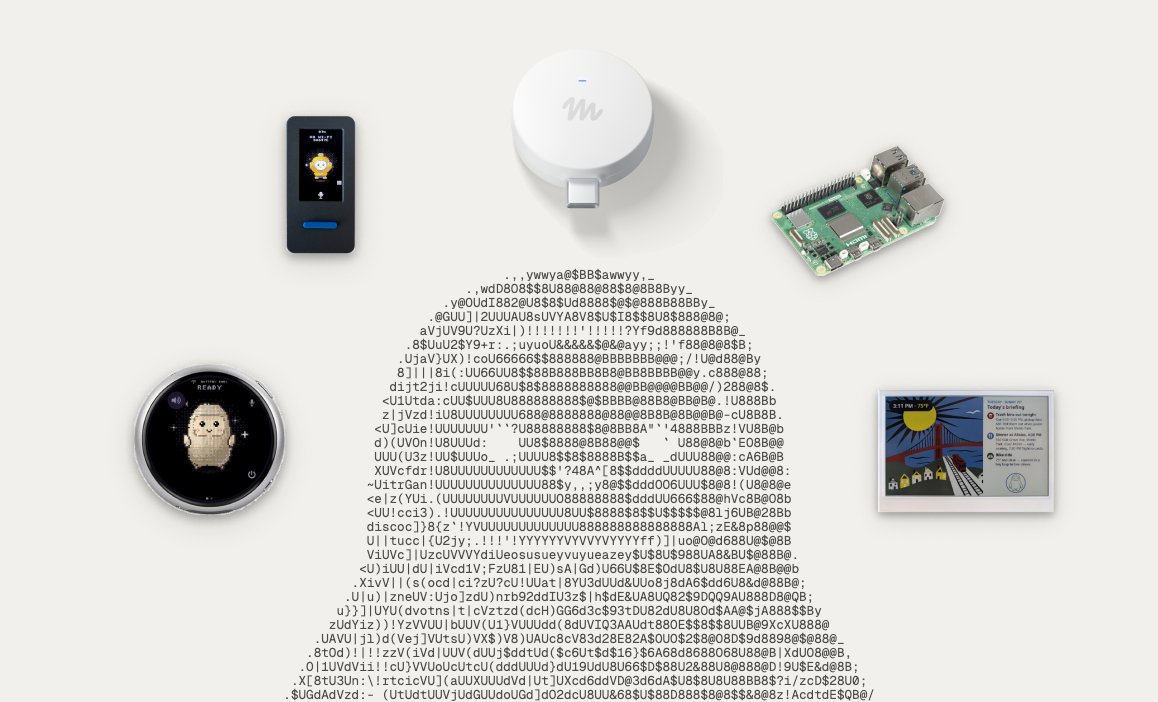
Meta announced Muse Gadgets, an open-source stack that lets hobbyists build AI hardware on ESP32 boards and connect projects to Meta's Muse agent, and said it produced five thousand Muse Home Link USB-C devices for smart home control. Techmeme-linked Engadget reporting adds open ESP32 firmware and a Linux SDK for hardware such as Raspberry Pi 5, and The Verge cites example builds like color E Ink reminder displays or Muse on an HDMI stick for big screens. The Decoder frames open sourcing as a way for Meta to learn which AI hardware form factors users want. Makers get a concrete low-cost integration path, but the excerpts do not document adoption, full licensing terms, or measured outcomes from that form-factor probe.
Meta open-sources Muse Gadgets ESP32 DIY stack and Muse Home Link USB-C batch
Meta announced Muse Gadgets, an open-source project that lets hobbyists build their own AI hardware using ESP32 boards and connect it to Meta's AI agent Muse. The team also produced 5,000 units of the "Muse Home Link," a USB-C device for smart home control.
Key takeaway
Coverage describes open tooling and a 5,000-unit Home Link run, yet Meta's form-factor learning is framed as intent rather than demonstrated market signal.
What happened
Per The Decoder, Meta announced Muse Gadgets as an open-source project enabling hobbyists to assemble AI hardware on ESP32 boards and link those devices to Meta's Muse AI agent.
The same reporting states Meta produced 5,000 Muse Home Link USB-C units for smart home control; Techmeme cites Engadget on open ESP32 firmware and a Linux SDK for boards like Raspberry Pi 5, and The Verge lists sample projects such as E Ink displays and HDMI-stick big-screen setups.
Evidence
Meta announced Muse Gadgets as an open-source ESP32 hobbyist stack tied to the Muse agent.
The Decoder · attributed
Meta announced Muse Gadgets, an open-source project that lets hobbyists build their own AI hardware using ESP32 boards and connect it to Meta's AI agent Muse.
Meta produced 5,000 Muse Home Link USB-C devices for smart home control.
The Decoder · attributed
The team also produced 5,000 units of the "Muse Home Link," a USB-C device for smart home control.
The release includes open ESP32 firmware and a Linux SDK for platforms such as Raspberry Pi 5.
Techmeme · attributed
Meta announces Muse Gadgets, providing an open source ESP32 microchip firmware and a Linux SDK to let users bring Muse to their hardware, like Raspberry Pi 5
Meta suggests DIY form factors including E Ink displays and HDMI-stick large-screen setups.
The Verge AI · attributed
The company suggests projects like loading Muse on a color E Ink display to show reminders, adding it to an HDMI stick so you can display Muse on a big screen
Open sourcing is described as helping Meta learn which AI hardware form factors people want.
The Decoder · attributed
The open-source approach also helps Meta figure out which AI hardware form factors people actually want.
Why it matters
It gives builders a low-cost, agent-branded hardware integration surface while Meta positions community builds as input on preferred gadget shapes.
Limits and uncertainties
The Decoder excerpt is incomplete and does not establish adoption, engagement, or program timeline.
Engadget coverage quoted via Techmeme notes limited public detail on Meta's separate tamagotchi-like AI device.
Open-source licensing scope and whether form-factor learning has produced measurable outcomes are not established in the packet.
Practical implications
Prototype Muse on ESP32 boards or Raspberry Pi 5 using the reported firmware and Linux SDK stack.
Evaluate USB-C Muse Home Link against DIY paths when testing smart-home control integrations.
Use suggested E Ink or HDMI-stick builds as reference form factors when scoping agent hardware experiments.
What to watch
Publication of full open-source license terms and repository maintenance signals.
Availability and distribution details for the 5,000-unit Muse Home Link batch.
Community project counts or Meta statements tying DIY builds to chosen retail form factors.