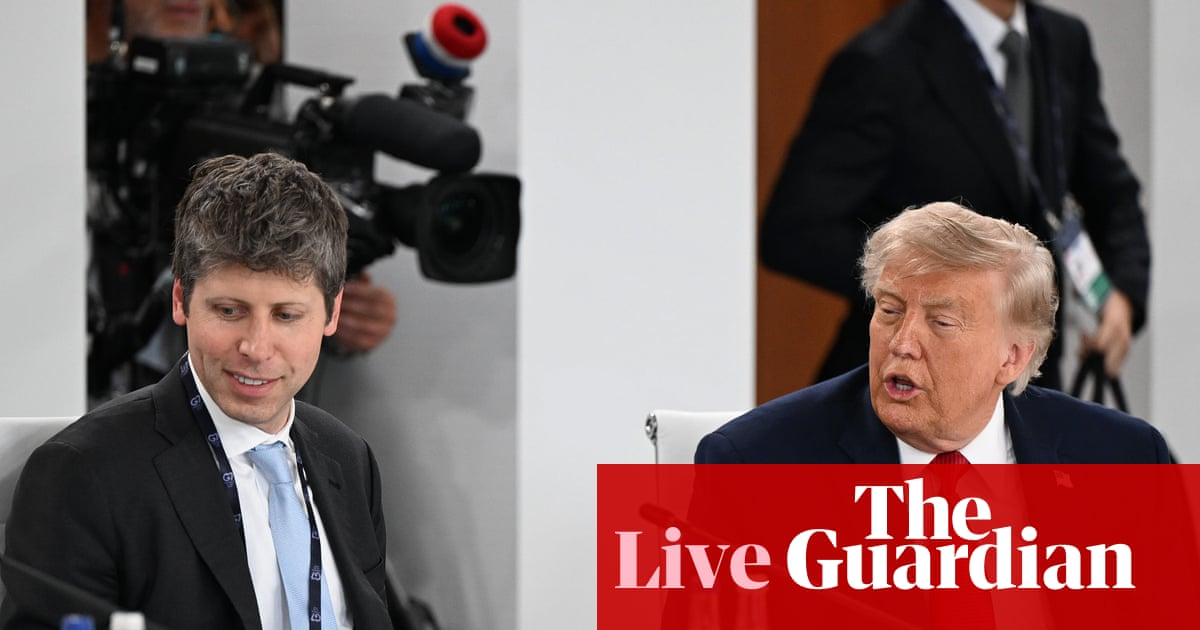
Trump says he is the only AI guardrail as Republicans reject tougher checks
Donald Trump and senior Republicans are publicly rejecting calls for stronger artificial intelligence oversight, casting regulatory pressure as a conspiracy against AI and data-center buildout. Trump told reporters he is the only guardrail AI needs, a line echoed by Axios reporting that a strong, smart president is sufficient, while Le Figaro coverage describes Republicans denouncing negative forces that would slow development and warning the United States could lose the race against China. The rhetoric landed amid a global tech selloff after industry CEOs urged a slower pace of AI development. For builders and operators, the signal is political: federal restraint is being framed as pro-innovation and geopolitically necessary. The packet offers no specific legislative text or executive orders, so the practical shift remains rhetorical until concrete policy follows.
Trump says he is the only AI guardrail as Republicans reject tougher checks
Donald Trump has claimed there is a “SICK conspiracy” against artificial intelligence and data centers in response to the growing calls for greater checks on AI development. Trump claims he is only ‘guardrail’ needed to control AI as top Republicans join him in dismissing calls for more checks.
Key takeaway
Trump and top Republicans are framing tougher AI checks as a conspiracy, positioning presidential judgment as the sole guardrail instead of new oversight.
What happened
According to The Guardian live reporting on September 14, 2026, Donald Trump claimed there is a SICK conspiracy against artificial intelligence and data centers as calls grew for greater checks on AI development, and said he is the only guardrail needed to control AI while top Republicans joined him in dismissing those calls.
Axios reported Trump said a strong, smart president is the only guardrail AI needs, and Le Figaro coverage described Trump and Republicans denouncing negative forces seeking to slow AI, arguing such efforts would cause the United States to lose the AI race against China amid a global tech selloff after CEOs called for slowing development.
Evidence
Trump claimed a SICK conspiracy against AI and data centers and said he is the only guardrail needed.
The Guardian AI · attributed
Donald Trump has claimed there is a "SICK conspiracy" against artificial intelligence and data centers in response to the growing calls for greater checks on AI development.
Top Republicans joined Trump in dismissing calls for more AI checks.
The Guardian AI · attributed
Trump claims he is only 'guardrail' needed to control AI as top Republicans join him in dismissing calls for more checks.
Trump said a strong, smart president is the only guardrail AI needs.
Axios AI · attributed
Trump says a strong, smart president is the only "guardrail" AI needs - Axios
Trump and Republicans denounced negative forces seeking to slow AI development.
Le Figaro IA · attributed
Donald Trump and Republican figures are publicly denouncing those who seek to slow down AI development, labeling them as 'negative forces.'
Republicans argued slowing AI would cause the US to lose the race against China.
Le Figaro IA · attributed
Donald Trump and Republican allies are denouncing 'negative forces' that seek to slow down AI development, arguing that such efforts will cause the US to lose the AI race against China.
Why it matters
If deregulatory rhetoric hardens into policy, builders may face fewer federal safety mandates but also less predictable compliance baselines for large-scale AI and data-center deployment.
Limits and uncertainties
The Guardian packet critique notes the coverage lacks specific policy proposals or legislative details and focuses on rhetorical dismissal rather than concrete regulatory alternatives.
Practical implications
Operators should treat compliance planning as contingent until any executive or legislative AI-safety measures are actually introduced or withdrawn.
What to watch
Whether Republican AI rhetoric translates into specific federal legislation, executive orders, or rollbacks of existing oversight proposals.