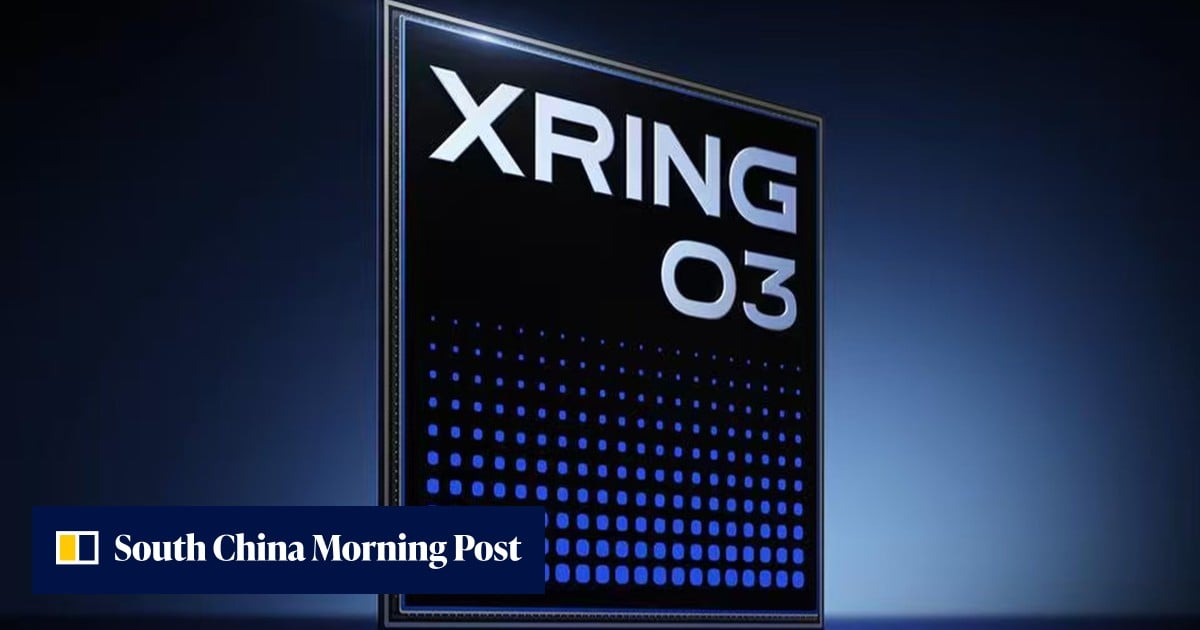
Xiaomi unveils Xring O100 6nm AI accelerator and Xring D100 3nm chip for MiMo and driving
Xiaomi has expanded its in-house Xring silicon lineup with two new processors aimed at on-device AI and autonomous driving, deepening a vertical-integration push that pairs custom chips with its MiMo foundation models. Reporting attributed to Iris Deng at the South China Morning Post describes the Xring O100 as a 6nm AI accelerator designed to work alongside the O3 mobile chip, while the 3nm Xring D100 targets autonomous-driving workloads. The move follows Xiaomi's launch of the 3nm Xring O3 mobile SoC, which Bloomberg framed as reducing reliance on Qualcomm and MediaTek. Reuters separately cited sources saying Xiaomi partnered with TSMC for Xring production, though that excerpt carried little technical detail. Builders should treat performance claims cautiously: no benchmark numbers, model sizes, or inference throughput have been disclosed, and the O3 is scheduled for a September debut on a folding smartphone.
Xiaomi unveils Xring O100 6nm AI accelerator and Xring D100 3nm chip for MiMo and driving
Xiaomi unveils the Xring O100, a 6nm AI accelerator to boost its MiMo models when paired with its O3 mobile chip, and the 3nm Xring D100 for autonomous driving. Chinese tech giant's Xring O3 3nm AI processor scheduled to debut aboard folding smartphone in September.
Key takeaway
Xiaomi is betting that co-designing AI silicon with its MiMo models is the path to defensible on-device intelligence, not merely another handset specification.
What happened
According to reporting attributed to Iris Deng at the South China Morning Post, Xiaomi unveiled the Xring O100, a 6nm AI accelerator built to accelerate its MiMo foundation models when paired with the O3 mobile chip, alongside the 3nm Xring D100 chip for autonomous driving.
Bloomberg reported that Xiaomi launched the 3nm Xring O3 mobile SoC to reduce reliance on Qualcomm and MediaTek, while SCMP noted the O3 3nm AI processor is scheduled to debut aboard a folding smartphone in September.
Evidence
Xiaomi unveiled the Xring O100 6nm AI accelerator and 3nm Xring D100 for autonomous driving
Techmeme · attributed
Xiaomi unveils the Xring O100, a 6nm AI accelerator to boost its MiMo models when paired with its O3 mobile chip, and the 3nm Xring D100 for autonomous driving
The O100 is designed to accelerate MiMo foundation models when paired with the O3 mobile chip
Techmeme · attributed
Xiaomi unveiled the Xring O100, a 6nm AI accelerator designed to accelerate its MiMo foundation models when paired with the O3 mobile chip, plus the 3nm Xring D100 for autonomous driving
The Xring O3 3nm AI processor is scheduled to debut on a folding smartphone in September
Techmeme · attributed
Chinese tech giant's Xring O3 3nm AI processor scheduled to debut aboard folding smartphone in September
Xiaomi launched the Xring O3 3nm SoC to reduce reliance on Qualcomm and MediaTek
Techmeme · attributed
Xiaomi launches the Xring O3, a 3nm SoC for its mobile devices, as the company seeks to reduce reliance on longtime suppliers Qualcomm and MediaTek
Xiaomi launched a mobile processor putting pressure on Qualcomm and MediaTek
Bloomberg Technology · attributed
Xiaomi Corp. launched a mobile processor for its marquee devices, putting pressure on Qualcomm Inc. and MediaTek Inc., which for years supplied the key component to the Chinese company.
Reuters sources say Xiaomi partnered with TSMC for Xring chip production
Reuters AI · attributed
Xiaomi launches new Xring chip, partners with TSMC for production, sources say - Reuters
No benchmark numbers, model sizes, or inference throughput were disclosed for the new chips
Techmeme · attributed
No benchmark numbers, model sizes, or inference throughput are disclosed, so the actual AI performance claim is unverified.
Why it matters
Device vendors that optimize silicon and models together may lower on-device inference costs but also deepen vendor lock-in for builders targeting mobile AI deployments.
Limits and uncertainties
No benchmark numbers, model sizes, or inference throughput are disclosed, so AI performance claims remain unverified.
The Reuters excerpt on TSMC production carried little substantive technical detail beyond sources-say framing.
The O3 September folding-phone debut suggests early-stage volume rather than production-scale capability.
Practical implications
Builders targeting on-device AI must account for tighter coupling between vendor silicon and foundation models such as MiMo.
Operators should verify TSMC production details and disclosed performance data before treating Xring as a production-scale alternative to third-party NPUs.
What to watch
September folding smartphone debut carrying the Xring O3 processor
Publication of benchmark numbers and inference throughput for the O100 and D100
Full Reuters reporting confirming TSMC partnership terms and production timeline
Original reporting: Xiaomi unveils the Xring O100, a 6nm AI accelerator to boost its MiMo models when paired with its O3 mobile chip, and the 3nm Xring D100 for autonomous driving (Iris Deng/South China Morning Post)