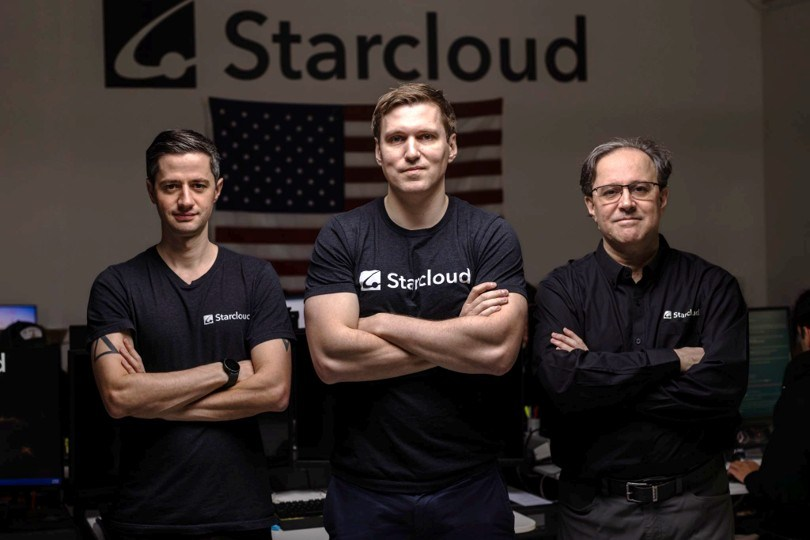
Starcloud adds $250M Series A extension for orbital AI inference satellites
Starcloud, which develops satellites that run AI inference in orbit, told TechCrunch it added a $250 million extension to its March $170 million Series A, lifting valuation to $2.3 billion. The capital joins a broader surge in orbital computing bets: Muon Space closed a $250 million Series C with Google and Salesforce Ventures to build spacecraft platforms for data centers and AI workloads in space. Starcloud has also requested FCC authorization for 88,000 spacecraft as it pursues orbital data centers. Yet TechCrunch reporting frames a looming bottleneck—not money but launch slots—as Falcon 9 is slated to retire in 2028 and Starship schedules face delays. Operators chasing space-based inference should treat ride access as the sector's emerging choke point.
Starcloud adds $250M Series A extension for orbital AI inference satellites
Starcloud , a startup developing satellites that can perform AI inference in orbit, told TechCrunch that it has added a $250 million extension to its March $170 million Series A funding round. The extension values the company at $2.3 billion.
Key takeaway
Launch capacity—not capital—is emerging as the binding constraint for orbital AI infrastructure as Falcon 9 retirement and Starship delays shrink deploy options.
What happened
Starcloud told TechCrunch it added a $250 million extension to its March $170 million Series A funding round for satellites that perform AI inference in orbit, valuing the company at $2.3 billion.
Muon Space closed a $250 million Series C with participation from Google and Salesforce Ventures to build spacecraft platforms for orbital data centers and AI computing, while Starcloud has sought FCC permission for 88,000 spacecraft amid tightening launch capacity.
Evidence
Starcloud added a $250 million extension to its March $170 million Series A, valuing the company at $2.3 billion.
TechCrunch AI · attributed
Starcloud , a startup developing satellites that can perform AI inference in orbit, told TechCrunch that it has added a $250 million extension to its March $170 million Series A funding round. The extension values the company at $2.3 billion.
Starcloud requested FCC permission for 88,000 spacecraft.
TechCrunch AI · attributed
Starcloud has raised $250 million to build orbital data centers and requested FCC permission for 88,000 spacecraft.
Launch capacity is constrained by Falcon 9 retirement in 2028 and Starship delays.
TechCrunch AI · attributed
The company faces significant headwinds due to constrained launch capacity, specifically the scheduled end of Falcon 9 in 2028 and delays in St
Muon Space raised a $250M Series C with participation from Google.
Techmeme · attributed
Muon Space, which is building a spacecraft platform for orbital data centers and AI computing, raised a $250M Series C, with participation from Google (Yash Roy/Bloomberg)
Google and Salesforce Ventures participated in Muon Space's $250M Series C.
Techmeme · attributed
Muon Space has closed a $250M Series C round with participation from Google and Salesforce Ventures to build spacecraft platforms for orbital data centers.
Why it matters
Heavy AI workloads may shift toward space-based platforms backed by major tech investors, but scaling constellations depends on securing scarce launch windows rather than raising capital alone.
Limits and uncertainties
TechCrunch reporting cites Starship delays without specifying revised launch dates in the available excerpts.
The packet does not confirm how much of Starcloud's FCC authorization request has been approved or denied.
Practical implications
Infrastructure planners should model launch-slot availability, not just funding milestones, when sizing orbital AI deployments.
Builders evaluating orbital inference should weigh long-term launch contracts or alternative providers as Falcon 9 nears its scheduled 2028 retirement.
What to watch
SpaceX Starship timeline updates that could expand or further constrain high-volume satellite deployment capacity.
FCC decisions on Starcloud's request for permission covering 88,000 spacecraft.