RayNeo iO Glasses launch as camera-free AI glasses with text overlays
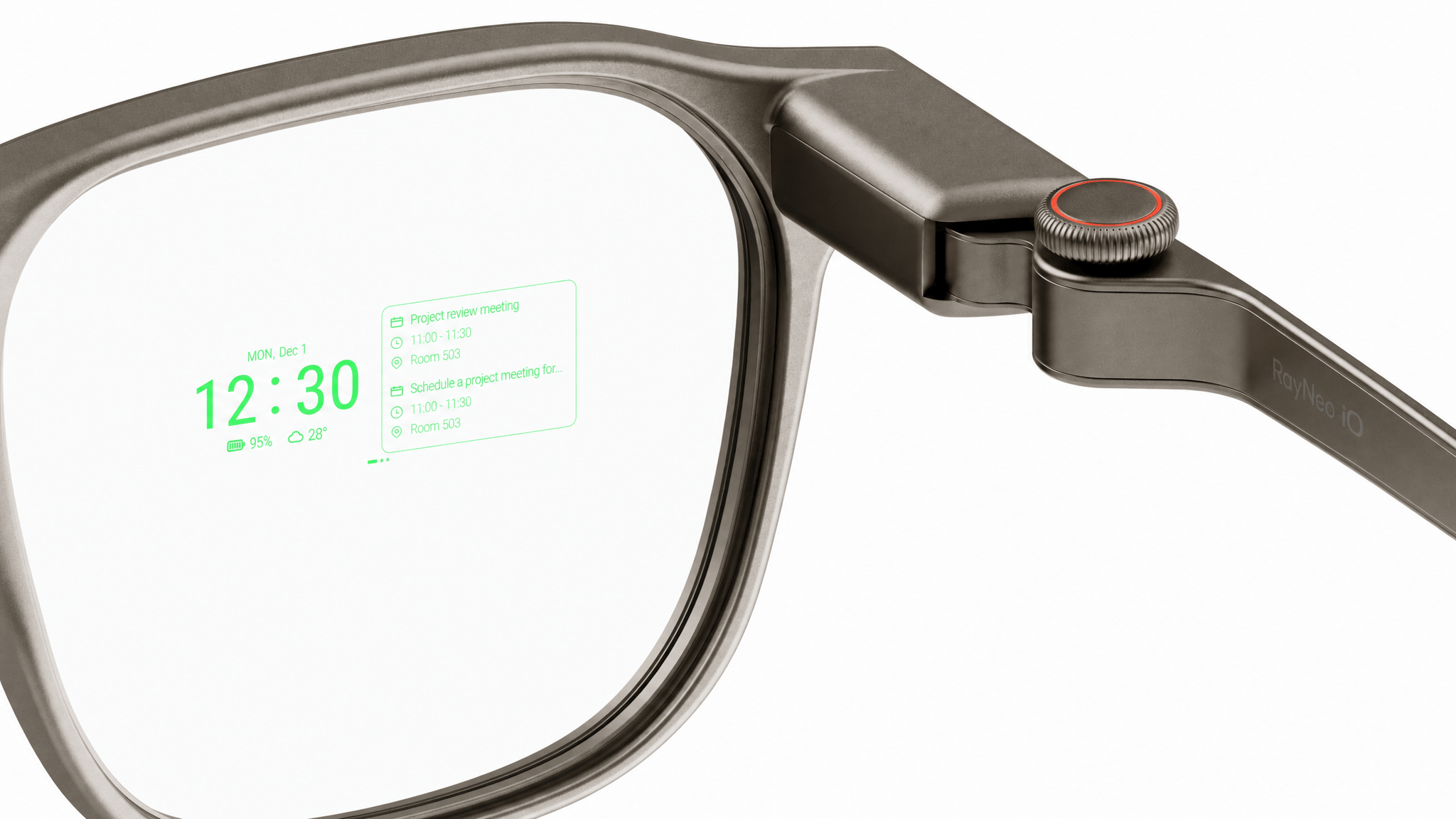
RayNeo has launched the iO Glasses, a deliberately camera-free and speaker-free AI headset that projects information into the wearer's field of view rather than capturing the surrounding environment. Instead of following the smart-glasses pattern built around onboard cameras and audio, the device uses a green waveguide display to render text overlays while preserving situational awareness. The Decoder reports the lens stack is designed for high transparency, at about 97 percent, and high outdoor readability, at roughly 1,300 nits of brightness. That hardware choice signals a privacy-conscious alternative in a category often criticized for always-on recording. For builders and operators, the product frames a narrower but clearer use case: contextual text in view without audiovisual sensing. The available reporting is still early and thin on price, availability, battery life, and software partnerships, so market impact remains to be demonstrated.
RayNeo iO Glasses launch as camera-free AI glasses with text overlays
RayNeo launches an AI glasses with no camera and no speaker. The RayNeo iO Glasses overlay text into the wearer's field of view through a green waveguide display, with 97 percent transparency and about 1,300 nits of brightness.
Key takeaway
RayNeo iO Glasses pursue AI assistance through text overlays on a green waveguide display, deliberately omitting cameras and speakers unlike most smart glasses.
What happened
RayNeo has launched the RayNeo iO Glasses, an AI headset designed without a camera or speakers, according to reporting from The Decoder published on August 22, 2026.
The glasses overlay text into the wearer's field of view using a green waveguide display that The Decoder says offers about 97 percent transparency and roughly 1,300 nits of brightness.
Evidence
RayNeo is launching a new headset without a camera or speakers.
The Decoder · attributed
RayNeo is launching a new headset without a camera or speakers.
The RayNeo iO Glasses use a green waveguide display to overlay text into the wearer's field of view.
The Decoder · attributed
The RayNeo iO Glasses overlay text into the wearer's field of view through a green waveguide display, with 97 percent transparency and about 1,300 nits of brightness.
The display is specified at about 97 percent transparency and roughly 1,300 nits of brightness.
The Decoder · attributed
with 97 percent transparency and about 1,300 nits of brightness.
Why it matters
The launch tests whether consumers will adopt AI wearables optimized for low-intrusion text delivery rather than sensing-heavy designs dominant in the category.
Limits and uncertainties
The Decoder report does not specify pricing, launch markets, battery life, or which AI services power the overlays.
Available excerpts are brief and include no independent hands-on performance validation.
Practical implications
Hardware and product teams can compare camera-free waveguide stacks as a privacy-oriented alternative to camera-centric smart glasses.
Operators evaluating workplace wearables may weigh text-only augmentation when audiovisual capture raises compliance or user-acceptance barriers.
What to watch
Whether RayNeo releases fuller specifications, software partnerships, and regional availability beyond The Decoder's initial report.