ICE Bars Employees From Wearing Meta AI Glasses Over Sensitive Data Risk
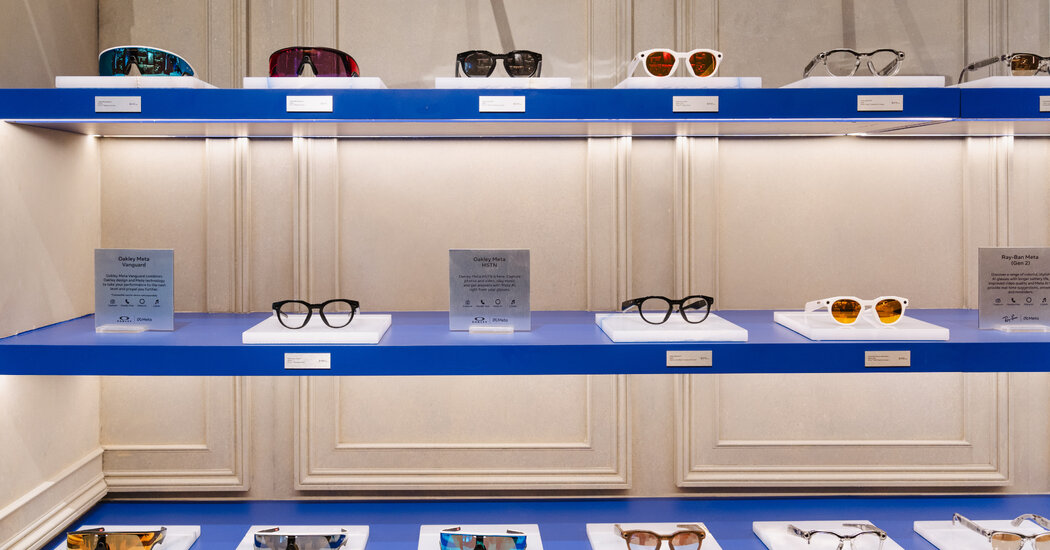
U.S. Immigration and Customs Enforcement has barred employees from wearing Meta's AI smart glasses on the job, according to an internal memo reported by the New York Times. The agency cited risks that the devices could unintentionally capture, record, or transmit sensitive information. ICE joins a growing number of workplaces and groups restricting Meta's ambient wearable devices amid broader privacy concerns. The restriction lands as Meta pursues patents for glasses that use facial recognition to identify people and generate social highlight reels, shifting wearable AI toward identity-aware recording. For builders and operators, the ICE memo signals that federal agencies mirror private-sector limits on always-on capture hardware. Material caveats remain: the packet does not specify enforcement details, scope across ICE facilities, or duration of the ban.
ICE Bars Employees From Wearing Meta AI Glasses Over Sensitive Data Risk
An internal ICE memo bars employees from wearing Meta's AI glasses, citing risk the devices could unintentionally capture, record, or transmit sensitive information. The New York Times reported the restriction via Techmeme.
Key takeaway
Consumer AI glasses face a structural adoption barrier in regulated workplaces as ICE joins bans over unintentional capture risks.
What happened
An internal ICE memo bars employees from wearing Meta's AI glasses, citing risk the devices could unintentionally capture, record, or transmit sensitive information, according to reporting attributed to the New York Times via Techmeme.
The New York Times reported ICE joins a growing number of workplaces and groups that have banned Meta's devices, which have spurred privacy concerns. Separately, 404 Media reported Meta has filed patents for AI glasses capable of identifying individuals via facial recognition and generating highlight reels of social events.
Evidence
ICE barred employees from wearing Meta's AI glasses over sensitive data risk.
Techmeme · attributed
Internal memo: ICE bars its employees from wearing Meta's AI glasses, saying they "could unintentionally capture, record, or transmit sensitive information" (New York Times)
ICE joins workplaces and groups banning Meta devices amid privacy concerns.
NYTimes Technology · attributed
The agency joins a growing number of workplaces and groups to ban Meta's devices, which have spurred privacy concerns.
Meta patented AI glasses using facial recognition to generate social highlight reels.
404 Media AI · attributed
According to 404 Media, Meta has filed patents for AI glasses capable of identifying individuals via facial recognition and automatically generating highlight reels of social events like dinner parties.
Why it matters
Federal law-enforcement adoption of hardware bans extends ambient-AI restrictions beyond private enterprises into government operations.
Limits and uncertainties
The packet does not specify ICE enforcement procedures, geographic scope of the ban, or whether the restriction is temporary or permanent.
404 Media patent reporting is separate from the ICE memo and does not establish that patented features are deployed in current Meta glasses.
Practical implications
Wearable AI products targeting enterprise or government buyers may need verifiable controls against unintentional capture, recording, and transmission of sensitive data.
Operators in regulated environments should treat ambient AI hardware policies as expanding from private workplaces into federal agencies.
What to watch
Whether other federal agencies issue similar bans on Meta or other ambient AI wearables.
ICE publication of enforcement scope, exceptions, or compliance guidance for the smart-glasses restriction.
Meta responses or product changes addressing unauthorized recording and data transmission concerns cited in workplace bans.
Original reporting: Internal memo: ICE bars its employees from wearing Meta's AI glasses, saying they "could unintentionally capture, record, or transmit sensitive information" (New York Times)