GeoPT: MIT and Tsinghua pretraining method simulates physics with 60% less data
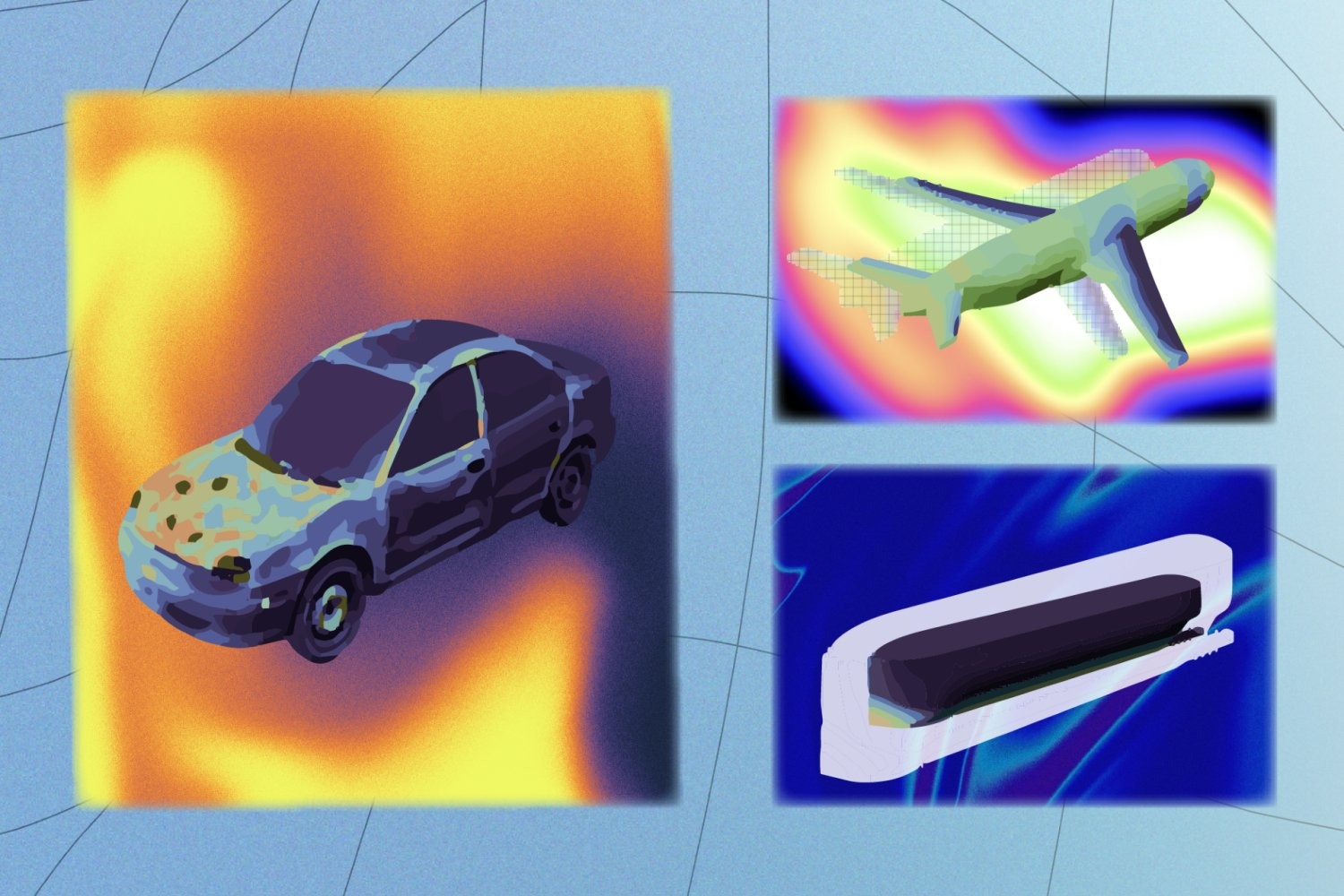
MIT and Tsinghua researchers introduced GeoPT, a pretraining method that teaches simulation models physics as a third modality alongside text and pixels. By virtually reenacting particle interactions on 3D shapes, GeoPT helps models understand physics, enabling them to simulate real-world scenarios like wind, water, and collisions more accurately. The approach reportedly reaches peak performance twice as fast and trains on up to 60 percent less data compared to leading models. This suggests a shift toward physics-aware foundation models that could generalize across tasks without extensive fine-tuning. However, the method's current scope focuses on industrial scenarios, and further validation is needed to confirm broader applicability.
GeoPT: MIT and Tsinghua pretraining method simulates physics with 60% less data
A new pre-training approach known as “GeoPT,” deveoped by researchers at MIT’s Computer Science and Artificial Intelligence Laboratory (CSAIL) and Tsinghua University, gives simulation models a chance to learn physics in a broader, more efficient way. These simulations give the models a sense of how physics works, helping them model the real world more accurately, reach peak performance twice as fast, and train on up to 60 percent less data compared to leading models.
Key takeaway
Physics is emerging as a foundational AI modality, enabling more generalizable world models and reducing the need for massive task-specific training data.
What happened
MIT CSAIL and Tsinghua University researchers developed GeoPT, a pretraining approach that gives simulation models a feel for physics by virtually reenacting everyday mechanical interactions in 3D. The method shows how particles stop when reaching objects, providing a sense of physics that enhances their ability to model the real world accurately.
According to MIT News, GeoPT enables models to reach peak performance twice as fast and train on up to 60 percent less data compared to leading models. Researchers believe physics is the third modality for AI after text and pixels, and the model could be a step toward a physics foundation model.
Evidence
GeoPT helps AI models understand the basics of physics so they can simulate how objects respond to things like wind and water more efficiently and accurately.
MIT AI News · attributed
“GeoPT” helps AI models understand the basics of physics so they can simulate how objects respond to things like wind and water more efficiently and accurately.
GeoPT enables models to reach peak performance twice as fast and train on up to 60 percent less data compared to leading models.
MIT AI News · attributed
reach peak performance twice as fast, and train on up to 60 percent less data compared to leading models.
The researchers believe physics is the third modality for AI models, after text and pixels.
MIT AI News · attributed
“We believe physics is the third modality for AI models, after text and pixels,” says MIT PhD student and CSAIL researcher Minghao Guo, a co-lead author on a paper introducing GeoPT.
Why it matters
For builders and researchers, this suggests a shift toward physics-aware foundation models that can generalize better across diverse tasks, potentially reducing the need for massive, task-specific fine-tuning in simulation and enabling more efficient development of AI systems that interact with the physical world.
Limits and uncertainties
The report focuses on industrial simulation scenarios; performance on other types of physical interactions is not fully detailed.
The 60% data reduction and 2x speedup claims are based on the researchers' own comparisons with leading models, and independent verification is not yet available.
Practical implications
Builders of physics-based simulation tools could integrate GeoPT to reduce training data requirements and speed up model convergence for tasks like vehicle design and robotics.
Developers should validate GeoPT's performance on their specific domains beyond industrial scenarios before adoption.
What to watch
Release of the GeoPT paper or open-source code for independent evaluation.
Benchmarks comparing GeoPT to other foundation models on diverse physics tasks.