Claude ships unified memory across Chat and Cowork
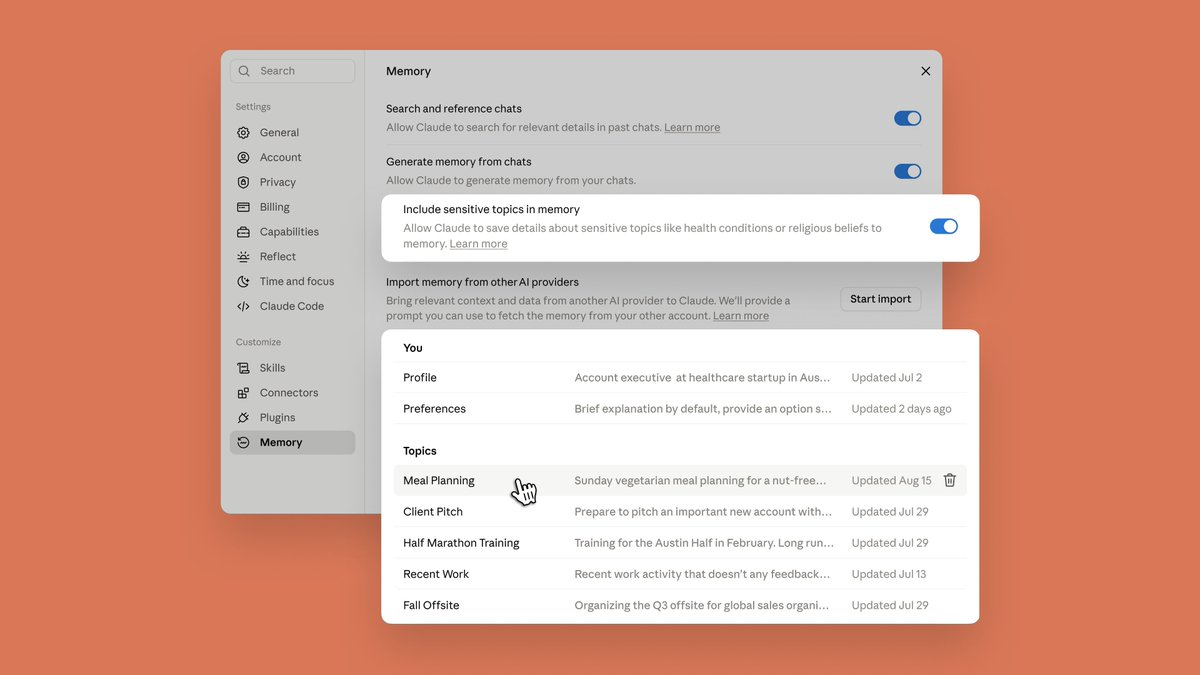
Anthropic has unified Claude's memory across Chat and Cowork, giving users control over what information persists across both surfaces. According to the company's announcement, Cowork tasks now begin with context Claude already retains from prior conversations, including projects, manager preferences, and client history, rather than starting cold on each assignment. The change aims to reduce repeated context-setting when moving from chat to agentic work. Users decide what stays in memory, though the packet does not detail retention policies, storage limits, or enterprise controls. Secondary snippets mention settings toggles for sensitive topics and a dedicated memory tab, but those details are not fully confirmed in the primary post.
Claude ships unified memory across Chat and Cowork
Anthropic announced one shared memory layer spanning Claude Chat and Claude Cowork, with users deciding what persists. Cowork tasks now start from context Claude already holds from prior chats, including projects, manager preferences, and client history.
Key takeaway
Claude Chat and Cowork now share one user-controlled memory layer, so agent tasks can reuse prior conversational context instead of starting from scratch.
What happened
Anthropic announced a single shared memory layer spanning Claude Chat and Claude Cowork, with users deciding what information persists across both products.
The company said Cowork tasks now start from context Claude already holds from prior chats, including projects, manager preferences, and client history, rather than beginning without that background.
Evidence
Anthropic announced one shared memory layer spanning Claude Chat and Claude Cowork.
X · attributed
Anthropic announced one shared memory layer spanning Claude Chat and Claude Cowork, with users deciding what persists.
Users decide what memory persists across Chat and Cowork.
X · attributed
Claude now has one memory across chat and Claude Cowork, and you decide what's in it.
Cowork tasks start from prior chat context such as projects, manager preferences, and client history.
X · attributed
Hand Cowork a task and it starts from what Claude already knows from your chats: the project you talked through, your manager's preferences, or the client from last quarter.
Why it matters
Unified memory lowers the friction of handing persistent work context from dialogue into automated Cowork runs, shifting how teams design workflows around Claude.
Limits and uncertainties
The primary announcement does not specify retention limits, enterprise controls, or how memory sync behaves across accounts.
Secondary snippets reference sensitive-topic toggles, categorized memories, and a dedicated memory tab, but those details are not confirmed in the primary owned post.
Practical implications
Teams routing chat context into Cowork should audit what users choose to persist before relying on shared memory in production workflows.
What to watch
Official Anthropic settings or documentation confirming memory retention controls, sensitive-topic toggles, and the dedicated memory tab referenced in community snippets.
Original reporting: Claude now has one memory across chat and Claude Cowork, and you decide what's in it.
Hand Cowork a task and it starts from what Claude already knows from your chats: the project