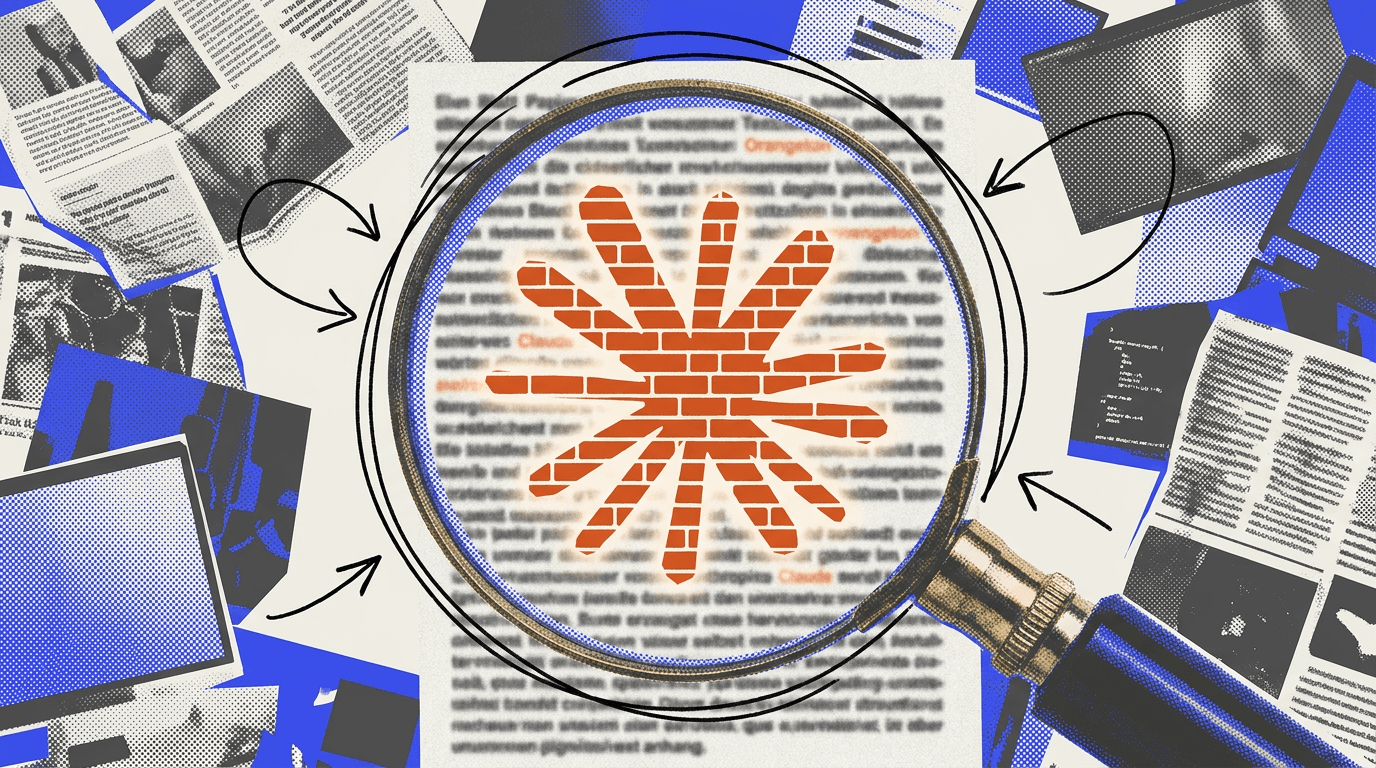
Anthropic rolls out global Claude text watermarking for EU AI Act compliance
Anthropic is deploying invisible text watermarks across Claude globally to meet EU AI Act transparency rules, extending the requirement worldwide because regional limits are not technically feasible. Models released after August 2 embed fingerprints using Google DeepMind's open SynthID-Text approach, shifting provenance from guesswork toward machine verification. Reporting describes a probabilistic signal baked into word selection rather than hidden characters, which may subtly change phrasing even as Anthropic insists quality is unaffected. The marking indicates likely Claude involvement, not certainty, and is sparse in code and factual prose while weakening after edits or full rewrites. Builders should treat watermark detection as a compliance aid, not a hard guarantee for moderation or legal workflows.
Anthropic rolls out global Claude text watermarking for EU AI Act compliance
Anthropic is rolling out watermarking to comply with the EU AI Act but applies it globally because it can't limit the feature by region. All Claude models released after August 2 support the marking.
Key takeaway
Global Claude watermarking makes AI text machine-detectable via probabilistic word-choice fingerprints, not a universal proof of authorship.
What happened
Anthropic is rolling out text watermarking to comply with the EU AI Act but applies it globally because it cannot limit the feature by region, and all Claude models released after August 2 support the marking, according to owned-news reporting summarized by The Decoder.
Coverage cites Google DeepMind's SynthID-Text technique, which alters word probabilities to embed a detectable fingerprint without adding hidden characters, while Anthropic says the watermark only shows Claude was likely involved, is sparse in code and factual text, and disappears after a full rewrite.
Evidence
Anthropic is rolling out watermarking for EU AI Act compliance globally because regional limits are not feasible, and post-August 2 Claude models support it.
The Decoder · attributed
Anthropic is rolling out watermarking to comply with the EU AI Act but applies it globally because it can't limit the feature by region. All Claude models released after August 2 support the marking.
Future Claude models will embed invisible watermarks using Google DeepMind's SynthID-Text technique.
Towards AI · attributed
Anthropic announced that future Claude models will embed invisible watermarks in generated text using Google DeepMind's SynthID-Text technique.
Anthropic is applying invisible watermarks to Claude-generated text to comply with Europe's AI transparency rules.
The Verge AI · attributed
Anthropic has clarified how it's planning to apply invisible watermarks to Claude-generated text in order to comply with Europe's AI transparency rules.
The watermark alters word probabilities to embed a fingerprint and could degrade Claude's writing despite claims of no quality impact.
Techmeme · attributed
Anthropic's text watermark alters word probabilities to embed a fingerprint, which could degrade Claude's writing, despite its claim of no impact on quality
Anthropic's mechanism alters word choices based on a probabilistic model without adding hidden characters.
Hacker News AI · attributed
Anthropic published a technical explanation of its text watermarking mechanism, revealing that it alters word choices based on a probabilistic model without adding hidden characters.
Watermarks are less effective in code or lightly edited text where human authorship dominates.
TechCrunch AI · attributed
Anthropic clarified that Claude's watermarks rely on arbitrary word choices, so they are less effective in code or lightly edited text where human authorship dominates.
The watermark indicates likelihood rather than certainty and disappears after a full rewrite.
Techmeme · attributed
Anthropic details Claude's text watermark: it only shows Claude was likely involved, is sparse in code and factual text, and disappears after a full rewrite
Critics doubt that word choice stays unaffected and lawyers are facing new transparency headaches.
The Decoder · attributed
Anthropic's text watermarking for Claude is supposed to make AI-generated content detectable. But critics doubt that word choice stays unaffected, and lawyers are facing new transparency headaches.
Why it matters
Operators must redesign trust, moderation, and disclosure pipelines around a best-effort provenance signal that can nudge wording and fades under editing.
Limits and uncertainties
The watermark is probabilistic, sparse in code and factual text, and can disappear after a full rewrite or heavy human editing.
Critics and commentators dispute whether altering word probabilities leaves phrasing and output quality unchanged.
Practical implications
Content pipelines should not treat SynthID-Text detection as a binary filter, especially for code, factual copy, or collaboratively edited text.
Legal and compliance teams need workflows that account for likelihood-based provenance rather than deterministic authorship proof.
What to watch
Whether post-August 2 Claude releases show measurable shifts in word-choice distributions or user-reported quality regressions.
How EU regulators and downstream platforms operationalize verification when watermarks weaken after editing or in code-heavy outputs.