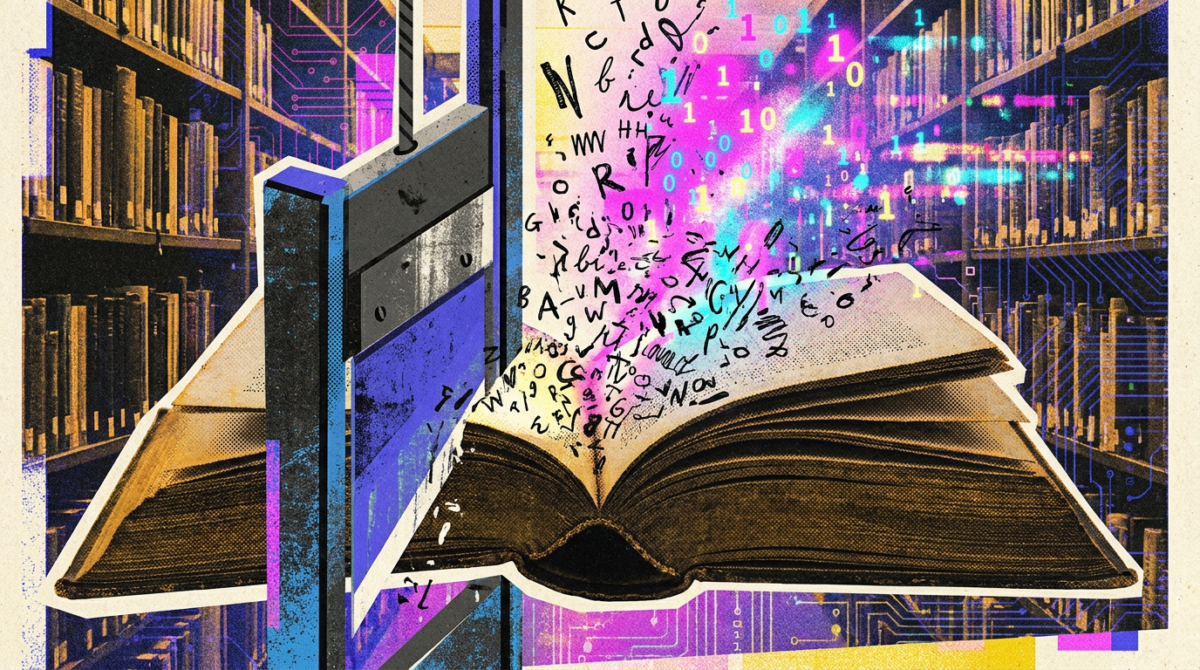
AirTag Investigation Tracks Amazon Destroying Scanned Books for Nova Training
Reporting traced by AirTag and follow-on coverage describes Amazon purchasing rare and commercial printed books in bulk, scanning them for AI training, and destroying the physical copies in the process. A tracked shipment reached an Amazon warehouse in Las Vegas where workers cut book spines to speed scanning for Nova model training, according to The Decoder and 404 Media reporting echoed by TechCrunch and others. The coverage frames this as a physical supply-chain pipeline for text data that is scarce online, not merely digital scraping. For operators and policy stakeholders, the signal is that training-data provenance now extends to warehouse logistics and destructive digitization. Coverage also notes analysis linking dedicated facilities such as VGT3 to large-scale de-binding operations, though full corporate attribution and legal status remain matters of ongoing reporting rather than settled fact.
AirTag Investigation Tracks Amazon Destroying Scanned Books for Nova Training
Amazon buys printed books in bulk, scans them for AI training data, and destroys them in the process. The shipment ended up at an Amazon warehouse in Las Vegas where workers cut book spines to speed scanning for Nova model training.
Key takeaway
Physical book destruction for scanning exposes a warehouse-level blind spot in how AI labs source and document training text.
What happened
404 Media reported tracking a shipment of rare books with an AirTag that ultimately arrived at an Amazon AI training facility, describing anonymous, high-budget buyers acquiring physical literature specifically for AI scanning.
The Decoder and TechCrunch report that Amazon buys printed books in bulk, scans them as training data, and destroys them in the process, with workers at a Las Vegas warehouse cutting book spines to speed scanning for Nova model training.
Evidence
Amazon buys large quantities of printed books, scans them as AI training data, and destroys them in the process.
The Decoder · attributed
Amazon buys large quantities of printed books, scans them as AI training data, and destroys them in the process.
A tracked shipment reached a Las Vegas Amazon warehouse where workers cut book spines to speed scanning for Nova model training.
The Decoder · attributed
The shipment ended up at an Amazon warehouse in Las Vegas where workers cut book spines to speed scanning for Nova model training.
404 Media tracked a shipment of rare books using an AirTag to an Amazon AI training facility.
Hacker News AI · attributed
404 Media tracked a shipment of rare books using an AirTag, revealing that anonymous, high-budget buyers are acquiring physical literature specifically for AI scanning.
Rare books are valuable for LLM training because models have already trained on what is available online.
TechCrunch AI · attributed
Rare books are incredibly valuable for training LLMs, since these models have already trained on whatever's available online.
Amazon is purchasing and cutting the spines of rare books to scan them for AI training.
TechCrunch AI · attributed
Amazon is purchasing and physically cutting the spines of rare books to scan them for AI training, a move driven by the need for high-quality, out-of-print text that is not available on the open web.
Amazon has dedicated facilities such as VGT3 in Las Vegas to receive, de-bind, and scan physical books for AI training data.
Hacker News AI · attributed
Amazon has established dedicated facilities, such as VGT3 in Las Vegas, to receive, de-bind, and scan millions of physical books for AI training data.
Why it matters
Publishers and compliance teams cannot rely on digital monitoring alone when out-of-print inventory can be purchased, scanned, and discarded offline.
Limits and uncertainties
The packet excerpts do not include a full on-the-record Amazon response to every allegation about rare-book destruction and Nova training.
References linking the operation to Anthropic Project Panama appear in secondary analysis rather than uniformly across primary reporting excerpts.
Practical implications
Training-data audits should extend to physical procurement, warehouse handling, and destruction workflows, not only web crawls and licensed datasets.
Book dealers and publishers may need shipment tracking and bulk-order safeguards when anonymous buyers target out-of-print inventory.
What to watch
Whether Amazon or partners publish formal policies on physical book scanning, spine removal, and retention of purchased inventory.
Follow-up reporting on VGT3 Las Vegas operations and any copyright or preservation challenges tied to Nova training data.